prasterone 10 MG Oral Tablet
Managing this medication for someone you care for? Eleplan keeps diagnoses, medications and appointments in one plan.
Start free with EleplanClinical drug
prasterone 10 MG Oral Tablet
10 MG · Oral Tablet · oral
A form of prasterone →
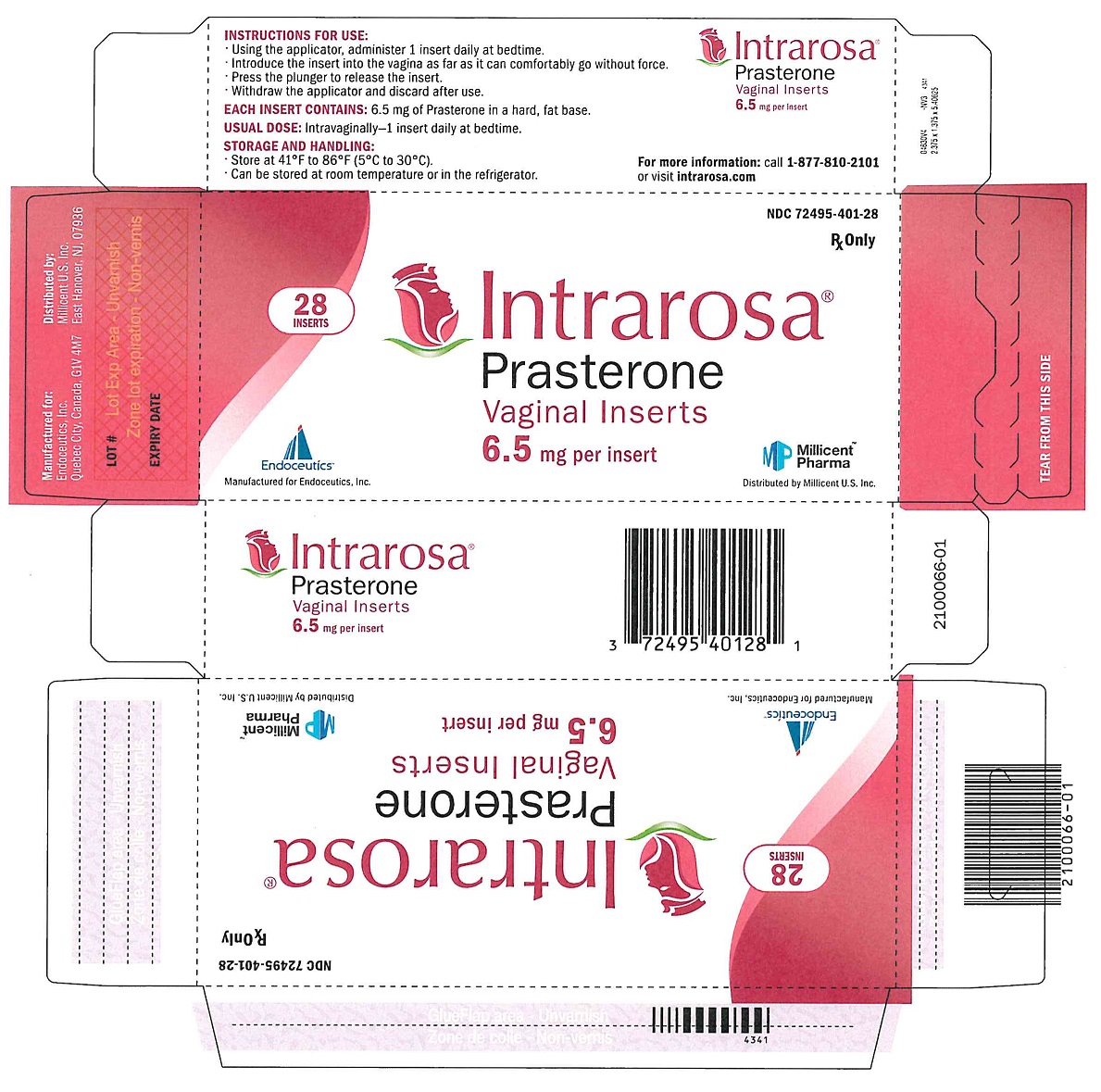
prasterone 10 MG Oral Tablet — Androstan derivatives. INDICATIONS AND USAGE INTRAROSA ® is a steroid indicated for the treatment of moderate to severe dyspareunia, a symptom of vulvar and vaginal…
Active ingredient
Classification
Androstan derivatives
Indications
INDICATIONS AND USAGE INTRAROSA ® is a steroid indicated for the treatment of moderate to severe dyspareunia, a symptom of vulvar and vaginal atrophy, due to menopause. INTRAROSA ® is a steroid indicated for the treatment of moderate to severe dyspareunia, a symptom of vulvar and vaginal atrophy, due to menopause. ( 1 )
Dosage
DOSAGE AND ADMINISTRATION Administer one INTRAROSA vaginal insert once daily at bedtime, using the provided applicator. One vaginal insert, once daily at bedtime. ( 2 )
Warnings
WARNINGS AND PRECAUTIONS Current or Past History of Breast Cancer. ( 5.1 ) 5.1 Current or Past History of Breast Cancer Estrogen is a metabolite of prasterone. Use of exogenous estrogen is contraindicated in women with a known or suspected history of breast cancer. INTRAROSA has not been studied in women with a history of breast cancer. 5.1 Current or Past History of Breast Cancer Estrogen is a metabolite of prasterone. Use of exogenous estrogen is contraindicated in women with a known or suspected history of breast cancer. INTRAROSA has not been studied in women with a history of breast cancer.
Contraindications
CONTRAINDICATIONS Undiagnosed abnormal genital bleeding: Any postmenopausal woman with undiagnosed, persistent or recurring genital bleeding should be evaluated to determine the cause of the bleeding before consideration of treatment with INTRAROSA. Undiagnosed abnormal genital bleeding. ( 4 )
Mechanism of action
CLINICAL PHARMACOLOGY 12.1 Mechanism of Action Prasterone is an inactive endogenous steroid and is converted into active androgens and/or estrogens. The mechanism of action of INTRAROSA in postmenopausal women with vulvar and vaginal atrophy is not fully established. 12.3 Pharmacokinetics In a study conducted in postmenopausal women, administration of the INTRAROSA vaginal insert once daily for 7 days resulted in a mean prasterone C max and area under the curve from 0 to 24 hours (AUC 0-24 ) at Day 7 of 4.4 ng/mL and 56.2 ng·h/mL, respectively, which were significantly higher than those in the group treated with placebo (Table 1). The C max and AUC 0-24 of the metabolites testosterone and estradiol were also slightly higher in women treated with the INTRAROSA vaginal insert compared to those receiving placebo. Table 1. C max and AUC 0-24 of Prasterone, Testosterone, and Estradiol on Day 7 Following Daily Administration of Placebo or INTRAROSA (mean ± SD). 1: N=8 Placebo (N=9) INTRAROSA (N=10) Prasterone C max (ng/mL) 1.60 (±0.95) 4.42 (±1.49) AUC 0-24 (ng·h/mL) 24.82 (±14.31) 56.17 (±28.27) Testosterone C max (ng/mL) 0.12 (±0.04) 1 0.15 (±0.05) AUC 0-24 (ng·h/mL) 2.58 (±0.94) 1 2.79 (±0.94) Estradiol C max (pg/mL) 3.33 (±1.31) 5.04 (±2.68) AUC 0-24 (pg·h/mL) 66.49 (±20.70) 96.93 (±52.06) Figure 1. Serum Concentrations of Prasterone (A), Testosterone (B), and Estradiol (C) Measured Over a 24h Period on Day 7 Following Daily Administration of Placebo or INTRAROSA (mean ± SD). In two primary efficacy trials, daily administration of INTRAROSA vaginal insert for 12 weeks increased mean serum C trough of prasterone and its metabolites testosterone and estradiol by 47%, 21% and 19% from baseline, respectively. This comparison based on C trough may underestimate the magnitude of increase in prasterone and metabolites’ exposure because it does not take into account the overall concentration-time profile following administration of INTRAROSA. Metabolism Exogenous prasterone is metabolized in the same manner as endogenous prasterone. Human steroidogenic enzymes such as hydroxysteroid dehydrogenases, 5α-reductases and aromatases transform prasterone into androgens and estrogens. Figure 1 12.1 Mechanism of Action Prasterone is an inactive endogenous steroid and is converted into active androgens and/or estrogens. The mechanism of action of INTRAROSA in postmenopausal women with vulvar and vaginal atrophy is not fully established. 12.3 Pharmacokinetics In a study conducted in postmenopausal women, administration of the INTRAROSA vaginal insert once daily for 7 days resulted in a mean prasterone C max and area under the curve from 0 to 24 hours (AUC 0-24 ) at Day 7 of 4.4 ng/mL and 56.2 ng·h/mL, respectively, which were significantly higher than those in the group treated with placebo (Table 1). The C max and AUC 0-24 of the metabolites testosterone and estradiol were also slightly higher in women treated with the INTRAROSA vaginal insert compared to those receiving placebo. Table 1. C max and AUC 0-24 of Prasterone, Testosterone, and Estradiol on Day 7 Following Daily Administration of Placebo or INTRAROSA (mean ± SD). 1: N=8 Placebo (N=9) INTRAROSA (N=10) Prasterone C max (ng/mL) 1.60 (±0.95) 4.42 (±1.49) AUC 0-24 (ng·h/mL) 24.82 (±14.31) 56.17 (±28.27) Testosterone C max (ng/mL) 0.12 (±0.04) 1 0.15 (±0.05) AUC 0-24 (ng·h/mL) 2.58 (±0.94) 1 2.79 (±0.94) Estradiol C max (pg/mL) 3.33 (±1.31) 5.04 (±2.68) AUC 0-24 (pg·h/mL) 66.49 (±20.70) 96.93 (±52.06) Figure 1. Serum Concentrations of Prasterone (A), Testosterone (B), and Estradiol (C) Measured Over a 24h Period on Day 7 Following Daily Administration of Placebo or INTRAROSA (mean ± SD). In two primary efficacy trials, daily administration of INTRAROSA vaginal insert for 12 weeks increased mean serum C trough of prasterone and its metabolites testosterone and estradiol by 47%, 21% and 19% from baseline, respectively. This comparison based on C trough may underestimate the magnitude of increase in prasterone and metabolites’ exposure because it does not take into account the overall concentration-time profile following administration of INTRAROSA. Metabolism Exogenous prasterone is metabolized in the same manner as endogenous prasterone. Human steroidogenic enzymes such as hydroxysteroid dehydrogenases, 5α-reductases and aromatases transform prasterone into androgens and estrogens. Figure 1
Indicated ICD-10 codes
Source: RxNorm + openFDA + RxClass + FAERS · 2026
Look up another medication